
TL;DR
Listen free for 30 days with Audible
Thousands of audiobooks and originals — cancel anytime.
Start your free trialAs an affiliate, we earn on qualifying purchases.
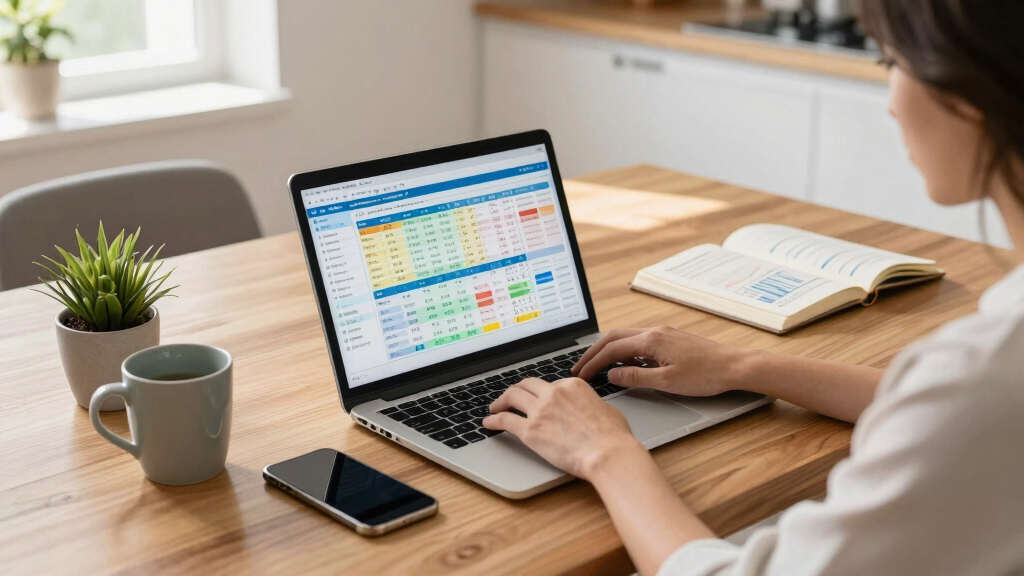
A well-structured monthly budget, based on real data and automated tools, stops guessing and shows your actual financial reality. Regular review and adjustments keep your goals on track.
The Monthly Budget Setup That Stops Guessing and Starts Showing Reality
A useful budget starts with actual income, complete spending data, and a review rhythm that keeps the plan alive. It is not about cutting everything; it is about seeing the real numbers clearly enough to make better choices.
Stop asking where the money went. Build a system that shows you.
Track first, set limits second, automate the boring parts, then adjust weekly or bi-weekly so your budget reflects real life instead of hopeful guesses.
Build from evidence, not intention.
Before setting limits, collect the full picture: all income sources, fixed commitments, variable spending, and periodic expenses that tend to appear as “surprises.”
Count every source
Salary, freelance income, side gigs, dividends, reimbursements, and irregular deposits all belong in the baseline.
Sort the patterns
Separate fixed bills, variable spending, and periodic costs so the budget shows tradeoffs instead of vague categories.
Use real averages
If groceries average $400, a $300 limit is not discipline; it is a future budget failure waiting to happen.
The setup turns estimates into visible signals.
Automation captures what memory misses. Over time, the budget becomes a dashboard for habits, pressure points, and progress toward savings or debt repayment.
A budget works when it keeps moving.
Static budgets get stale quickly. A weekly or bi-weekly review catches overspending early, updates assumptions, and keeps savings visible as a real monthly expense.
Sync accounts
Connect bank accounts and cards so income and spending land automatically.
Categorize
Group transactions into fixed, variable, periodic, savings, and debt categories.
Set limits
Use three months of history to set realistic targets instead of aspirational numbers.
Review
Check weekly or bi-weekly for leaks, spikes, and needed reallocations.
Adjust
Move money intentionally so the next month starts with better assumptions.
Guesswork vs. reality budgeting.
The difference is not complexity. It is whether the plan is based on what actually happened and whether it gets updated before small leaks become big problems.
| Budget habit | Guessing setup | Reality setup | Financial impact |
|---|---|---|---|
| Income tracking | ~ Uses only main paycheck | ✓ Includes salary, side gigs, dividends, freelance work | Spending limits match actual earning capacity |
| Expense categories | ✗ Broad buckets hide patterns | ✓ Fixed, variable, and periodic expenses are separated | Surprises become planned monthly allocations |
| Spending limits | ✗ Based on wishful cuts | ✓ Based on historical averages and seasonality | Less frustration and fewer abandoned budgets |
| Data collection | ~ Manual entry misses small purchases | ✓ Apps sync transactions and surface alerts | Small habits become measurable patterns |
| Savings | ✗ Saved only if money is left over | ✓ Automated as a core monthly expense | Emergency funds grow without constant willpower |
Use technology to lower the mental load.
Budgeting tools are useful because they reduce omission, reveal trend lines, and connect day-to-day spending to goals like debt payoff, emergency savings, or financial independence.
Non-negotiables
- Track every income stream before setting limits.
- Automate transaction capture wherever possible.
- Review weekly or bi-weekly while the data is still fresh.
- Adjust categories based on real behavior, not guilt.
- Treat savings as a planned expense, not a leftover.
Tool stack
Every dollar gets a visible path.
The strongest monthly budget setup connects inputs, habits, limits, automation, review, and goals into one repeatable loop.
Key Takeaways
- Track all income and expenses with real data before setting limits.
- Use automation tools to reduce manual errors and guesswork.
- Review your budget weekly or bi-weekly to stay on course.
- Adjust spending limits based on actual habits, not assumptions.
- Incorporate savings into your monthly plan to reflect true financial health.

Taja Budget Planner, Undated Budget Book with Expense Tracker, 6.9" x 9.9"
- Effective Budget Planning: Track income, expenses, savings, goals
- User-Friendly Layout: Easy navigation with dedicated pages
- Undated Monthly Calendar: Flexible scheduling with bonus stickers
As an affiliate, we earn on qualifying purchases.
As an affiliate, we earn on qualifying purchases.
How to Track Your Income Honestly and Accurately
Your income is the foundation of your budget. If you don’t know exactly what you bring in each month, your numbers will be off from the start. Including all sources—salary, side gigs, dividends, or freelance work—ensures your budget reflects your full financial picture. Using apps like Mint or YNAB to automate income tracking not only saves time but also reduces the risk of forgetting irregular or secondary income streams. Consistency here is crucial because underestimating or overestimating your income leads to inaccurate spending limits, which can cause either unnecessary restrictions or overspending. For example, if your paycheck is $2,500 and side gig earns you an extra $400, your total monthly income becomes $2,900. Recognizing all income sources helps you plan realistically, avoiding the trap of setting aspirational goals that don’t match your actual earning capacity, which can lead to frustration or debt. Accurate income tracking provides a stable baseline, enabling smarter financial decisions and fostering trust in your budget’s validity.

Smart Expense Tracker System: From Analysis to Implementation
As an affiliate, we earn on qualifying purchases.
As an affiliate, we earn on qualifying purchases.
Categorize Every Expense to Find the Real Spending Patterns
Breaking down your expenses into fixed, variable, and periodic categories helps uncover your true spending habits—why they matter is because they reveal where your money is really going, not just where you think it should be. Fixed expenses like rent, insurance, and subscriptions are predictable, but understanding their impact on your overall budget is vital because they set a baseline for your financial commitments. Variable expenses such as groceries, entertainment, and dining out fluctuate, and tracking these over several months helps you identify patterns—are you consistently overspending in certain areas? Periodic expenses, like car maintenance or gifts, can sneak up and disrupt your budget if not planned for. Recognizing these categories and their actual costs allows you to see tradeoffs—perhaps cutting back on dining out frees up funds for savings or debt repayment. This detailed categorization enables smarter planning, ensuring your budget isn’t just a rough estimate but a true reflection of your financial reality, allowing you to prioritize what matters most and avoid surprises that can derail your financial goals.

Budget Planner – Monthly Finance Organizer with Expense Tracker Notebook to Manage Your Money Effectively, Undated Finance Planner/Account Book, Start Anytimem,A5(8.6×5.9 inchs),100gsm Paper – Silvery
- Financial Management Sections: Goals, savings, debts, expenses, reviews
- High-Quality Paper: 100gsm paper reduces ink issues
- Durable Cover & Binding: Sturdy cover with twin-wire binding
As an affiliate, we earn on qualifying purchases.
As an affiliate, we earn on qualifying purchases.
How to Set Realistic Spending Limits Based on Your Data
Once you understand your actual spending, setting limits that mirror those habits is essential because it prevents the common mistake of budgeting based on wishful thinking. If your average grocery bill is $400, budgeting only $300 doesn’t account for your real needs, which can lead to frustration and the temptation to overspend or abandon the budget altogether. By analyzing your past three months of spending, you gain insight into seasonal variations or unexpected expenses, making your limits more accurate. For instance, if you spend $250 on entertainment during winter but $350 in summer, adjusting your budget accordingly prevents disappointment and helps you stay on track. The tradeoff here is between flexibility and discipline—setting limits too tight may cause stress or lead to neglecting your needs, while too loose can undermine your savings goals. Striking a balance ensures your budget is both credible and motivating, fostering habits that support financial stability rather than frustration or guilt.

SavePoint Personal Finance Software – Budgeting, FIRE Planning, Monte Carlo Simulations, Balance Sheets, Cash Flow – 100% Offline, No Subscriptions, + 8GB USB Drive (Runs on PC & Mac)
- Offline Data Privacy: Keeps your data local and secure
- Lifetime License: One-time purchase with updates included
- Supports Multiple Devices: Use on up to 2 computers
As an affiliate, we earn on qualifying purchases.
As an affiliate, we earn on qualifying purchases.
Automate Data Collection to Minimize Guesswork
Connecting your bank accounts and credit cards to budgeting apps like Mint or YNAB automates transaction tracking, which is crucial because manual entry is prone to errors and omissions. This automation not only saves time but also captures every spending detail in real-time, providing a comprehensive view of your financial activity. The importance of this lies in the fact that manual tracking can lead to underreporting or forgetting small expenses—like that daily coffee or subscription renewal—that add up over time. Automated data collection ensures accuracy and consistency, transforming guesswork into factual insights. For example, if you buy coffee for $5 every morning, automatic tracking records this daily expense without effort, revealing how much you’re spending on small indulgences. Over time, patterns emerge—perhaps you’re spending more on takeout than you realized. This clarity allows you to make informed adjustments, prioritize your financial goals, and develop habits that support long-term stability, all while reducing the mental load of managing your budget.
How to Monitor and Adjust Your Budget Regularly
Setting a routine for reviewing your budget—weekly or bi-weekly—is vital because it keeps your financial picture current and relevant. Regular monitoring helps you catch overspending early, so you can adjust before small leaks become big problems. For example, if you overspent on dining out last month, you might decide to cut back or reallocate funds to savings or debt repayment. Using visual tools like charts or color-coded categories makes this process more intuitive, allowing you to see at a glance where adjustments are needed. The tradeoff is that inconsistent reviews can lead to outdated assumptions, causing you to either overspend or miss opportunities to save. Regular tweaks—like lowering your entertainment budget after a costly month—keep your budget aligned with your evolving circumstances and priorities. This ongoing process fosters discipline and awareness, turning your budget into a dynamic tool that adapts to your life, rather than a static plan that quickly becomes irrelevant or ignored.
Incorporate Savings and Emergency Funds Seamlessly
Your budget should prioritize savings as a core expense because it directly impacts your financial security and long-term goals. Automating a fixed percentage—such as 10%—of your income into a separate savings or emergency fund ensures you’re consistently building a safety net without having to think about it each month. This approach is important because it removes the temptation to spend what you might otherwise allocate for savings, making financial discipline easier and more sustainable. For example, if your income is $3,000, setting aside $300 monthly for emergencies or future investments means your savings grow steadily, even if your expenses fluctuate. The tradeoff is that initially, this reduces your available cash flow, which might require lifestyle adjustments. However, the benefit is a clearer picture of your true financial health, free from the illusion that your income can cover everything without planning. Over time, consistent savings create a buffer that reduces stress, prepares you for unexpected expenses, and accelerates your progress toward financial independence.
Using Technology to Keep Your Budget on Track
Leveraging tools like YNAB, Mint, or Personal Capital is essential because they automate many aspects of budgeting—syncing with your accounts, sending alerts, and providing real-time insights. These features are crucial because they reduce the mental effort required to stay on top of your finances, especially as your financial situation becomes more complex. For instance, if you’re nearing your dining out limit, the app might notify you and suggest cheaper alternatives or remind you to cut back. The importance of these technological tools lies in their ability to turn budgeting from a manual chore into an ongoing, automated process—saving time, reducing errors, and increasing accountability. The tradeoff is that reliance on technology requires trust in the tools and some initial setup time, but the payoff is a more disciplined, consistent, and accurate financial management system that adapts as your habits evolve.
Frequently Asked Questions
How do I create a budget that actually works for me?
Start by tracking your actual expenses for a couple of months. Use that data to set realistic limits, then automate and review regularly. It’s about making your budget fit your real life, not some idealized version.What tools or apps are best for automated budgeting?
Popular options include Mint, YNAB, and Personal Capital. They sync with your bank accounts, reduce manual entry, and give you ongoing insights into your spending habits.How often should I review and adjust my budget?
Aim for weekly or bi-weekly reviews, especially when you’re just starting out. Regular check-ins help catch overspending early and keep your plan aligned with reality.What if my expenses are higher than my income?
Identify non-essential categories to cut back, look for ways to increase your income, or both. Adjusting your lifestyle gradually makes this easier and more sustainable.How can I stay motivated to stick to my budget?
Set clear goals, track your progress visually, and celebrate small wins. Remember, every dollar saved is a step toward your bigger financial dreams.Conclusion
Stop guessing and start seeing your real financial picture. Building a budget based on actual data, automated tools, and regular reviews turns guesswork into clarity. The goal isn’t perfection but progress—making your money work for your goals, not against them.Grilling season Picks
grills
As an affiliate, we earn on qualifying purchases.