

When comparing financial literacy workbooks for teens, the differences come down to depth versus approachability: some workbooks drill budgeting with hands-on worksheets, while others read more like lightweight guides with a few exercises sprinkled in. Financial Literacy Workbook for Teens Ages 14–18 stands out as my best overall pick because it balances practical activities with coverage of credit, investing, and money management — the full range a high schooler actually needs. 35 Money Skills Workbook for Teenagers Ages 15-19 earns the best value spot with skill-based structure at a lower price point, while Money Matters Workbook for Teens is the choice for parents who want a classroom-tested classic. Younger teens or reluctant readers may prefer gentler options like Teen Financial Literacy Made Simple. Read on for the full breakdown of all 11 workbooks.
Play games included with Prime
Start a Prime free trial and play with Amazon Luna on your devices.
Start playingAs an affiliate, we earn on qualifying purchases.
Key Takeaways
- Workbooks with fill-in budget sheets and real-life scenario exercises (the Ages 14–18 Practical Guide and 35 Money Skills) consistently deliver more skill-building than narrative-style guides like Money Skills for Teens: A Beginner’s Guide.
- Age banding matters more than branding: several ‘teen‘ workbooks actually target ages 10–13 (Evan-Moor, Mark Twain Grades 5+), so buying by grade level rather than cover design avoids a mismatch.
- The best budget pick, 35 Money Skills Workbook, covers nearly the same ground as workbooks twice its price — the premium options mainly add breadth on investing and credit, not better exercises.
- Cryptocurrency coverage is a genuine differentiator: only the Financial Literacy Activity Book and Financial Literacy for Teens Unlocked address it, which matters for teens asking modern money questions.
- The Parents’ Guide format flips the model — it coaches the adult rather than the teen — and works best as a companion volume, not a standalone teen workbook.
| Financial Literacy Activity Book for Teens |  | Most Interactive Pick | Format: Paperback activity workbook | Target Age: Teenagers (roughly 13-17) | Topics Covered: Budgeting, saving, spending, credit, debit, banking, cryptocurrency | VIEW LATEST PRICE | See Our Full Breakdown |
| Financial Literacy for Teens Parents’ Guide |  | Best for Parents Teaching at Home | Format: Book (format unspecified) | Intended Reader: Parents and caregivers of teenagers | Topics Covered: Budgeting, saving, investing, financial independence | VIEW LATEST PRICE | See Our Full Breakdown |
| Financial Literacy for Teens Unlocked: Master Your Money, Budget, Save, and Invest Like the Pros |  | Best for Ambitious Teens | Format: Book | Target Age: Older teens (approximately 15-19) | Topics Covered: Budgeting, saving, investing, wealth-building, financial independence | VIEW LATEST PRICE | See Our Full Breakdown |
| 35 Money Skills Workbook for Teenagers Ages 15-19 |  | Best Value Skill-Builder | Format: Paperback workbook | Target Age: 15-19 years | Structure: 35 progressive money skills and challenges | VIEW LATEST PRICE | See Our Full Breakdown |
| Teen Financial Literacy Made Simple: A Beginner’s Personal Finance Workbook for Kids and Teens |  | Best for Absolute Beginners | Format: Paperback workbook | Target Age: Kids and teens (beginner level) | Topics Covered: Fundamental personal finance: saving, spending, basics | VIEW LATEST PRICE | See Our Full Breakdown |
| Mark Twain Financial Literacy Workbook for Grades 5 and Up |  | Best for Middle School Classrooms | Target Level: Grades 5 and up | Topics Covered: Money management, economics, taxes | Format: Print workbook | VIEW LATEST PRICE | See Our Full Breakdown |
| Financial Literacy Workbook for Teens Ages 14–18: A Practical Guide to Budgeting, Saving, Investing, Credit Building, and Smart Money Management with Real-Life Activities for High School Students |  | Best High School Coverage | Target Age: 14-18 | Topics Covered: Budgeting, saving, investing, credit building, money management | Format: Print workbook | VIEW LATEST PRICE | See Our Full Breakdown |
| The Easy Peasy Guide to Money Skills for Teens: 7 Simple Habits to Effective Saving, Spending, Budgeting, Investing, and Developing Financial Literacy | 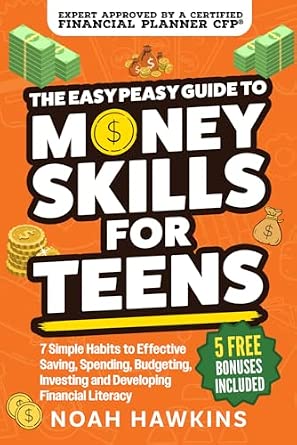 | Best Habits-Based Primer | Target Audience: Teenagers | Structure: 7-habit framework | Topics Covered: Saving, spending, budgeting, investing, financial literacy | VIEW LATEST PRICE | See Our Full Breakdown |
| Evan-Moor Financial Literacy and Life Skills for Kids, Ages 12-13 |  | Best Structured Activities | Target Age: 12-13 | Topics Covered: Budgeting, saving, spending, credit | Format: Print workbook | VIEW LATEST PRICE | See Our Full Breakdown |
| Money Matters Workbook for Teens (Ages 15-18) |  | Best for Late Teens Heading to Independence | Target Age: 15-18 | Topics Covered: Money management, budgeting, financial planning | Format: Print workbook | VIEW LATEST PRICE | See Our Full Breakdown |
| Money Skills for Teens: A Beginner’s Guide to Budgeting, Saving, and Investing |  | Best Quick-Read Primer | Format: Paperback book (reading-focused, not a workbook) | Target Age: Teenagers (approx. 13–18) | Core Topics: Budgeting, saving, investing | VIEW LATEST PRICE | See Our Full Breakdown |
| financial literacy workbooks for teen | Format | Topics Covered | Target Age |
|---|---|---|---|
| Financial Literacy Activity Bo | Paperback activity workbook | Budgeting, saving, spending, credit, debit, banking, cryptocurrency | Teenagers (roughly 13-17) |
| Financial Literacy for Teens P | Book (format unspecified) | Budgeting, saving, investing, financial independence | — |
| Financial Literacy for Teens U | Book | Budgeting, saving, investing, wealth-building, financial independence | Older teens (approximately 15-19) |
| 35 Money Skills Workbook for T | Paperback workbook | Budgeting, savings, wealth-building, financial confidence | 15-19 years |
| Teen Financial Literacy Made S | Paperback workbook | Fundamental personal finance: saving, spending, basics | Kids and teens (beginner level) |
| Mark Twain Financial Literacy | Print workbook | Money management, economics, taxes | — |
| Financial Literacy Workbook fo | Print workbook | Budgeting, saving, investing, credit building, money management | 14-18 |
| The Easy Peasy Guide to Money | Print book (guide-style) | Saving, spending, budgeting, investing, financial literacy | — |
| Evan-Moor Financial Literacy a | Print workbook | Budgeting, saving, spending, credit | 12-13 |
| Money Matters Workbook for Tee | Print workbook | Money management, budgeting, financial planning | 15-18 |
| Money Skills for Teens: A Begi | Paperback book (reading-focused, not a workbook) | — | Teenagers (approx. 13–18) |
More Details on Our Top Picks
Financial Literacy Activity Book for Teens
Most workbooks in this category lean on reading with a few exercises sprinkled in — this one flips that ratio, making activity-first learning the whole point. Compared with Teen Financial Literacy Made Simple, which stays close to fundamentals, this book pushes into modern territory like cryptocurrency and debit cards, topics teens actually ask about. That currency comes at a cost: the explanations behind each exercise are thin, so a teen who wants the “why” behind budgeting rules may finish the activities without deeper understanding. Parents using the Financial Literacy for Teens Parents’ Guide alongside it could fill that gap nicely, since the two are naturally complementary. This pick makes the most sense for teens who learn by doing rather than reading.
Pros:- Activity-based format keeps reluctant readers engaged
- Covers contemporary topics like cryptocurrency and digital banking
- Broad topic sweep from spending to saving in one volume
- Works well as a supplement to more explanatory books
Cons:- Shallow explanations behind the exercises
- No reviews or ratings to verify quality
- Coverage of many topics means none are explored deeply
Best for: Hands-on learners aged 13-17 who engage better with exercises and puzzles than with explanatory text
Not ideal for: Teens preparing for serious financial milestones like a first credit card or investment account — the depth just isn’t there
- Format:Paperback activity workbook
- Target Age:Teenagers (roughly 13-17)
- Topics Covered:Budgeting, saving, spending, credit, debit, banking, cryptocurrency
- Learning Style:Interactive exercises and activities
- Reading Level:Teen-friendly
- Supplementary Materials:None included
Our verdict“Choose this if your teen learns by doing and you want modern topics covered lightly rather than classic topics covered deeply.”
Financial Literacy for Teens Parents’ Guide
This is the odd one out in the lineup, and deliberately so: it’s written for the parent, not the teen. Where 35 Money Skills Workbook for Teenagers hands exercises directly to the student, this guide hands teaching strategies to the adult — conversation frameworks, pacing suggestions, and ways to model budgeting and investing at home. That makes it a strong companion rather than a competitor; families who buy only this will still need a teen-facing workbook for practice. The tradeoff is real: format and length details are undisclosed, and there are no reviews to gauge whether the strategies land. Compared with simply handing a teen Financial Literacy for Teens Unlocked, this demands more parental time but produces far more durable money habits through dialogue.
Pros:- Unique parent-facing angle in a teen-dominated category
- Focuses on teaching strategies, not just content
- Directly supports the transition to financial independence
- Pairs well with any teen workbook in this roundup
Cons:- Requires ongoing parental time and involvement
- No format, length, or page-count information available
- Zero customer reviews to validate the approach
Best for: Parents who want to actively teach money skills through conversation and modeling rather than delegating to a workbook
Not ideal for: Families wanting a self-directed resource the teen can complete alone — this requires adult participation to deliver value
- Format:Book (format unspecified)
- Intended Reader:Parents and caregivers of teenagers
- Topics Covered:Budgeting, saving, investing, financial independence
- Approach:Teaching strategies and practical advice
- Age Range of Teens:Teenagers / young adults
- Supplementary Materials:None mentioned
Our verdict“Buy this as the adult’s manual alongside a teen workbook — not as a standalone gift for your teenager.”
Financial Literacy for Teens Unlocked: Master Your Money, Budget, Save, and Invest Like the Pros
Positioned as the aspirational pick, this book frames finance around wealth-building and investing rather than allowance management. Compared with Teen Financial Literacy Made Simple, which deliberately keeps things basic, this one stretches toward investing “like the pros” — appealing to older teens already thinking about index funds and compound growth. The language stays accessible, which is its quiet strength; many investing-focused teen books get jargon-heavy fast. The main tradeoff: it reads more than it exercises. A teen who wants to practice with real worksheets will get more from 35 Money Skills Workbook for Teenagers, and there’s no word on supplementary materials here. This option stands out for motivated 16-19 year olds who see money as a tool for independence, not just a budgeting chore.
Pros:- Goes beyond basics into investing and wealth-building
- Clear, accessible language despite advanced topics
- Strong emphasis on financial independence as a goal
- Good fit for self-motivated readers
Cons:- Reading-heavy format with limited interactive practice
- No edition details or supplementary materials disclosed
- May overwhelm teens new to money concepts
Best for: Ambitious teens aged 16-19 who already grasp basics and want to move into investing and wealth-building
Not ideal for: Younger teens or complete beginners who need foundational activities before investing concepts make sense
- Format:Book
- Target Age:Older teens (approximately 15-19)
- Topics Covered:Budgeting, saving, investing, wealth-building, financial independence
- Learning Style:Instructional reading, minimal exercises
- Reading Level:Teen-friendly with investing terminology
- Supplementary Materials:None mentioned
Our verdict“The right pick for the teen who asks about stocks — skip it if your teen still needs to master a basic budget.”
35 Money Skills Workbook for Teenagers Ages 15-19
The structured 35-skill progression is what separates this workbook from looser competitors. Rather than a grab bag of activities like the Financial Literacy Activity Book for Teens, this builds skill by skill from budgeting toward wealth-building and confidence — a format that suits teens who benefit from visible progress. The tight 15-19 age band is also a genuine differentiator: content assumes readers can handle part-time-job income and near-term adult decisions, unlike broader books that dilute material to serve a 10-17 range. The drawbacks are straightforward. There are no digital resources or answer keys mentioned, and parents can’t preview the specific skills list before buying. Compared with Financial Literacy for Teens Unlocked, it trades depth on investing for far more hands-on practice, which most teens need first.
Pros:- Clear 35-skill structure creates a sense of progression
- Challenges are practical and tied to real teen finances
- Explicitly builds decision-making confidence, not just knowledge
- Focused age range keeps content relevant
Cons:- No digital resources, templates, or answer materials included
- Limited content details available before purchase
- Investing coverage is lighter than deeper guides
Best for: Teens aged 15-19 with a job or allowance who want structured, trackable practice across core money skills
Not ideal for: Younger teens under 15 — the age-tuned content assumes income and near-adult decisions they don’t have yet
- Format:Paperback workbook
- Target Age:15-19 years
- Structure:35 progressive money skills and challenges
- Topics Covered:Budgeting, savings, wealth-building, financial confidence
- Learning Style:Challenge-based exercises
- Digital Resources:None included
Our verdict“A strong middle-of-roadup choice for older teens who want guided practice — just don’t expect digital extras.”
Teen Financial Literacy Made Simple: A Beginner’s Personal Finance Workbook for Kids and Teens
Where most entries here target teens squarely, this workbook bridges kids and teens, making it the gentlest on-ramp in the lineup. The word “simple” in the title is accurate — interactive activities reinforce fundamental concepts like saving and spending without assuming any prior money knowledge. Compared with 35 Money Skills Workbook for Teenagers, the pacing is slower and the ceiling lower; a 17-year-old with a job will outgrow it quickly. And unlike Financial Literacy for Teens Unlocked, it deliberately avoids advanced topics like investing — a limitation, but arguably the right one for a first workbook. The tradeoff is longevity: families get accessibility in exchange for a book that may last a year before the teen is ready for something meatier. This pick makes the most sense as a confidence-building first step.
Pros:- Genuinely accessible for readers with zero money background
- Interactive activities reinforce every concept
- Dual kid-teen range works well for siblings
- Low-pressure tone builds early confidence
Cons:- Skips advanced topics like investing and credit entirely
- Limited details on included materials or editions
- Short useful lifespan for quickly progressing teens
Best for: Kids and younger teens (roughly 10-14) with no prior money education who need a friendly, low-pressure start
Not ideal for: Older or experienced teens — the beginner pacing and lack of investing content will feel too basic within weeks
- Format:Paperback workbook
- Target Age:Kids and teens (beginner level)
- Topics Covered:Fundamental personal finance: saving, spending, basics
- Learning Style:Engaging activities and exercises
- Difficulty Level:Beginner / introductory
- Advanced Topics:Not covered
Our verdict“The ideal first money workbook for a young beginner — buy it as a starting point, not a complete financial education.”
Mark Twain Financial Literacy Workbook for Grades 5 and Up
Mark Twain’s workbook earns its spot as the bridge option for younger teens who aren’t ready for high-school-level material. Where Financial Literacy Workbook for Teens Ages 14–18 assumes readers can handle credit scores and investing basics, this one starts from the ground up with money management, economics, and taxes framed for grades 5 and up. That makes it the pick I’d point teachers and homeschool parents toward first, because it works as a structured curriculum backbone rather than a casual supplement. The tradeoff is real, though: older teens will find the pacing slow, and the publisher provides little detail about included materials, so buyers are somewhat left guessing about page count and activity density compared with more transparent competitors. Compared with Evan-Moor’s offering, it covers a broader age range but with less polish per activity.
Pros:- Curriculum-style structure suited to classroom and homeschool use
- Broad topic range including economics and taxes, not just budgeting
- Accessible entry point for grades 5 and up
- Backed by an established educational publisher
Cons:- Sparse product details make it hard to judge activity depth before buying
- Content skews young, limiting usefulness for upper high schoolers
Best for: Middle school teachers and homeschool parents who need a classroom-ready finance curriculum for mixed ages
Not ideal for: Parents of 16-18 year olds — the reading level and pacing will feel too elementary
- Target Level:Grades 5 and up
- Topics Covered:Money management, economics, taxes
- Format:Print workbook
- Intended Setting:Classroom or homeschool
- Publisher:Mark Twain Media / Carson Dellosa
- Included Materials Detail:Not specified
Our verdict“A solid curriculum choice for the 10-14 crowd, but skip it if your teen is already balancing a checking account.”
Financial Literacy Workbook for Teens Ages 14–18: A Practical Guide to Budgeting, Saving, Investing, Credit Building, and Smart Money Management with Real-Life Activities for High School Students
Of the entries aimed squarely at high schoolers, this one casts the widest net: budgeting, saving, investing, and credit building all get dedicated treatment, with real-life activities built in rather than tacked on. Compared with Money Matters Workbook for Teens, which leans on classic budgeting exercises, this guide pushes further into investing and credit — territory most teen workbooks treat lightly or skip. That makes it a better fit for a 16- or 17-year-old approaching their first job or bank account. The tradeoffs: it’s a newer release with no customer ratings to lean on, so there’s some risk in buying sight unseen, and the sheer topic breadth means nothing gets exhaustive depth. If your teen needs drilling on one skill, The Easy Peasy Guide is more focused; this is the pick for breadth.
Pros:- Full topic span from budgeting through investing and credit
- Real-life activities tied to actual teen situations
- Age-appropriate writing for 14-18 range
- Self-contained enough for independent study
Cons:- No customer ratings yet to validate quality
- Breadth comes at the cost of depth on individual topics
Best for: High schoolers ages 14-18 who want one workbook covering everything from first budgets to investing basics
Not ideal for: Buyers who rely on reviews — it has no ratings history yet, and detail-oriented learners may want deeper dives per topic
- Target Age:14-18
- Topics Covered:Budgeting, saving, investing, credit building, money management
- Format:Print workbook
- Activity Type:Real-life application exercises
- Customer Ratings:None available yet
- Reading Level:High school
Our verdict“The best single-volume choice for a high schooler starting from zero and wanting the full money picture.”
The Easy Peasy Guide to Money Skills for Teens: 7 Simple Habits to Effective Saving, Spending, Budgeting, Investing, and Developing Financial Literacy
Rather than drilling worksheets, The Easy Peasy Guide organizes everything around seven simple habits — a framing that works well for teens who bounce off dense activity books. It reads more like a friendly primer than a curriculum, which is exactly why it sits in a different lane than Mark Twain’s workbook: that one is built for structured lessons, while this one is built for a reluctant reader who needs the whole idea of money management made approachable. The tradeoff is that it skimps on exercises and worked examples, so teens who learn by doing will finish it understanding concepts without much practice applying them. Pair it with a hands-on workbook like Evan-Moor’s if you want both the mindset and the reps. On its own, it’s the gentlest on-ramp in this lineup.
Pros:- Simple seven-habit structure that’s easy to remember
- Covers saving, spending, budgeting, and investing in plain language
- Low-pressure format for reluctant readers
- Builds a mindset foundation before technical skills
Cons:- Few detailed examples or exercises to apply the habits
- No ratings or pricing transparency for buyers comparing options
Best for: Teens new to money topics who prefer a light, readable habit-building approach over worksheet-heavy study
Not ideal for: Hands-on learners who need exercises and real examples — the practice material here is thin
- Target Audience:Teenagers
- Structure:7-habit framework
- Topics Covered:Saving, spending, budgeting, investing, financial literacy
- Format:Print book (guide-style)
- Exercise Content:Minimal
- Customer Ratings:None available
Our verdict“A great first money book for a teen who won’t touch a workbook — just don’t expect practice problems.”
Evan-Moor Financial Literacy and Life Skills for Kids, Ages 12-13
Evan-Moor’s workbook is the most tightly targeted entry here, aimed at ages 12-13, and it shows in the design: real-world activities drive the lessons on budgeting, saving, spending, and credit rather than lecture-style text. Compared with Mark Twain’s workbook, which spans grades 5 and up with broader but thinner coverage, this one trades range for polish — each activity is built for a specific developmental window, which matters a lot for middle schoolers who drift when material is either too babyish or too advanced. The publisher’s reputation in education materials also gives it more credibility than self-published options like The Easy Peasy Guide. The drawback is a tight age ceiling; a 15-year-old will outgrow it quickly. And like several entries in this roundup, the contents aren’t well documented, so buyers can’t preview what’s inside before ordering.
Pros:- Activity-based learning that mirrors real financial decisions
- Precisely calibrated for the 12-13 age window
- Backed by an established educational publisher
- Introduces credit concepts earlier than most peers
Cons:- Very narrow age suitability limits long-term value
- Little documentation of contents, page count, or features
Best for: Parents and teachers of 12-13 year olds who want activity-driven lessons from a trusted education publisher
Not ideal for: Teens 14 and older — the narrow age band means they’ll finish or outgrow it fast
- Target Age:12-13
- Topics Covered:Budgeting, saving, spending, credit
- Format:Print workbook
- Activity Type:Real-world activities
- Publisher:Evan-Moor
- Customer Ratings:None available
Our verdict“The best fit for a seventh or eighth grader who learns by doing rather than reading.”
Money Matters Workbook for Teens (Ages 15-18)
Money Matters Workbook for Teens earns its role by focusing on the 15-18 window — the years when money decisions start having real consequences like part-time paychecks and car costs. Its lessons on managing money, budgeting, and financial planning are framed around that push toward independence, which distinguishes it from Evan-Moor’s workbook for 12-13 year olds and gives it a more mature tone. Compared with the Financial Literacy Workbook for Teens Ages 14–18, it takes a more traditional, exercise-driven approach rather than racing through every modern topic, which suits teens who benefit from repetition. The tradeoff: it’s lighter on content depth documentation, and there are no digital resources — no spreadsheets, apps, or online components — which feels dated next to newer competitors. For a teen a year from college, though, the fundamentals-first approach holds up.
Pros:- Focused on the pre-independence 15-18 age range
- Practical exercises tied to real teen financial decisions
- Fundamentals-first approach that builds confidence
- Long-standing title with established positioning in the category
Cons:- No digital resources or online companion materials
- Content depth is not well documented for pre-purchase comparison
Best for: 15-18 year olds approaching their first job, car, or college budget who need fundamentals drilled through practice
Not ideal for: Tech-forward teens and parents expecting digital tools or online companions — this is print-only and traditional
- Target Age:15-18
- Topics Covered:Money management, budgeting, financial planning
- Format:Print workbook
- Digital Resources:None included
- Approach:Exercise-driven lessons
- Reading Level:High school
Our verdict“A dependable print workbook for a teen on the cusp of financial independence, provided you don’t need digital extras.”
Money Skills for Teens: A Beginner’s Guide to Budgeting, Saving, and Investing
Where most entries in this roundup lean on fill-in-the-blank exercises, Money Skills for Teens takes a leaner, reading-first approach that gets a complete beginner from “what is a budget” to “how investing works” in a single sitting. Compared with the Financial Literacy Activity Book for Teens, which spreads similar concepts across hands-on worksheets, this one trades interactivity for speed and clarity — a fair swap for teens who resist anything that smells like homework. The explanations of saving and investing are where it holds its own against longer picks like Financial Literacy for Teens Unlocked, covering the essentials without overwhelming a first-timer. The tradeoff is real, though: with few worked examples and no practical exercises, teens who learn by doing will retain less. It reads best as a first book, not a only book.
Pros:- Covers budgeting, saving, and investing in one compact, beginner-friendly read
- Explains complex topics in plain language teens can absorb without adult help
- Promotes responsible money habits rather than just definitions
- Short enough to finish quickly, so reluctant readers actually complete it
Cons:- Lacks detailed real-world examples and practical exercises, so application is left to the reader
- No updated editions or supplementary materials indicated, which matters in fast-changing areas like investing
Best for: Teens brand new to money concepts who prefer reading over worksheets and need a fast, low-pressure introduction before moving to a heavier workbook
Not ideal for: Hands-on learners and parents wanting a structured curriculum — the absence of exercises and worksheets makes it a weak standalone teaching tool
- Format:Paperback book (reading-focused, not a workbook)
- Target Age:Teenagers (approx. 13–18)
- Core Topics:Budgeting, saving, investing
- Exercises Included:No — conceptual explanations only
- Reading Level:Beginner-friendly, plain-language explanations
- Length:Concise introductory guide
- Parent Involvement Needed:Low — designed for independent teen reading
Our verdict“Buy this as an affordable confidence-builder for a teen starting from zero, then pair it with a workbook like the Financial Literacy Activity Book for Teens to practice the concepts.”

How We Picked
I evaluated each workbook against four criteria that predict whether a teen will actually finish it and retain the material. Exercise quality came first: workbooks with fill-in budgets, spending trackers, and scenario-based decision activities ranked above those that mainly present text with occasional quizzes. Age and reading-level fit came second, because a brilliantly written book aimed at 11-year-olds will bore a 17-year-old, and vice versa. I checked publisher age bands against the actual vocabulary and math demands inside each book.
Third, I weighed topic coverage — the core four skills (budgeting, saving, spending, credit) plus extras like investing, banking, and crypto that separate a one-semester primer from a lasting reference. Finally, I assessed value: price per page of genuine activity, not just page count. This is why the rankings favor interactive workbooks over readable-but-passive guides, and why classroom-oriented picks from Mark Twain and Evan-Moor appear lower for teens despite strong reputations — they simply serve a younger audience better.
Factors to Consider When Choosing Financial Literacy Workbooks For Teens
Before picking a workbook from the list above, it helps to understand what separates a workbook a teen finishes from one that ends up half-blank on a shelf. These are the factors I weighed most heavily, and the tradeoffs parents most often get wrong.
Match the Age Band, Not the Word “Teen”
“Teen” on a cover can mean anything from 10 to 19, and the gap between a 6th grader and a high school senior is enormous. Workbooks aimed at the younger end use simpler vocabulary, smaller dollar amounts, and more illustrations — fine for a 12-year-old, patronizing for a 16-year-old. A common mistake is buying an advanced investing-heavy workbook for a middle schooler who hasn’t yet grasped why a budget exists, which leads to frustration and abandonment. Check the stated age or grade range, then skim a preview page if one is available to confirm the reading level matches. If you’re buying for a teen near the top of an age range, size up rather than down.
Prioritize Worksheets Over Reading
The single biggest differentiator in this category is the ratio of exercises to exposition. Financial literacy is a skill, and skills are built by doing — filling out a monthly budget, comparing two spending scenarios, calculating compound interest by hand. Some popular titles are 80% explanation with a few reflection prompts, which makes them informative but forgettable. Before buying, look at the table of contents and sample pages for phrases like “fill in,” “calculate,” or “track” rather than just chapter titles. A thinner workbook full of activities will teach more than a thick one full of paragraphs. This is also why several picks in this roundup outrank longer, cheaper alternatives.
Decide Whether Modern Topics Matter to You
Older and classroom-oriented workbooks often skip investing apps, cryptocurrency, credit scores as they work today, and digital banking — because they were written before these were mainstream. Whether that matters depends on your teen: a 15-year-old asking about Bitcoin will engage more with a workbook that addresses it honestly than one that pretends cash is king. On the other hand, modern-topic books sometimes sacrifice depth on fundamentals to make room for trendy material. The safest approach for most families is a fundamentals-first workbook, supplemented later if the teen’s curiosity branches out. Don’t pay a premium for crypto coverage a teen hasn’t asked about.
Consider Who Will Actually Use It
Some workbooks in this category are written directly to the teen, others are written to the parent or teacher facilitating the lessons. A parent-directed format works well for homeschool families or structured family money talks, but a teen handed a facilitator’s manual will tune out fast. Conversely, a self-directed teen workbook can leave parents unsure how to reinforce the lessons. Be honest about the dynamic in your house: if money conversations are already awkward, a parents’ guide format may actually lower the friction because the adult leads. If your teen is independent and motivated, hand them a teen-voiced workbook and step back.
Don’t Overpay for Page Count
Prices in this category range widely, and price correlates poorly with quality. The strongest value performers here cost less than the big-name classroom publishers’ titles while offering more teen-relevant exercises. Where higher prices are justified, it’s usually for broader topic coverage — investing, credit building, career income — rather than better writing. A reasonable benchmark is under a dollar per core chapter for a standard trade paperback workbook. Also beware of very short guides priced like full workbooks; anything under 80 pages is usually a primer rather than a course.
Plan for Follow-Through, Not Just Purchase
Any workbook is worthless if it’s completed once and shelved. The best results come when the workbook connects to the teen’s actual money — an allowance, a first paycheck, a savings app. Before buying, think about what real money your teen will manage while working through it, and consider timing the purchase around a first job or a debit card. Some families pair a workbook with a small matching-savings incentive to make lessons concrete. A mid-tier workbook applied to real money beats a premium workbook read in the abstract every time.
Frequently Asked Questions
What’s the right age to start a teen on a financial literacy workbook?
Most structured workbooks work best starting around ages 12–14, once a teen handles some money of their own and can do basic percentages. Younger kids (10–12) are better served by the elementary-targeted titles like the Evan-Moor and Mark Twain workbooks, which use simpler scenarios and vocabulary. Waiting until 16 or 17 still works, but you’ll want an older-teen workbook that covers credit, first jobs, and investing rather than allowance-based basics. The real trigger point isn’t age — it’s income. A teen with a first paycheck or regular allowance will get far more out of any workbook than one with no money to manage.
Should I buy a workbook written for the teen or a parents’ guide format?
It depends on who will drive the learning. Teen-voiced workbooks assume the reader is motivated and self-directed, which suits independent teens and works well for homeschool curricula or summer enrichment. Parents’ guides — like the Financial Literacy for Teens Parents’ Guide in this lineup — flip the responsibility to you, coaching the adult on how to teach and discuss money. That format shines when conversations about money are tense or when you want lessons embedded in daily family decisions. The mistake to avoid is buying a facilitator’s guide for a teen who expects a workbook they can work through alone; the mismatch usually means neither party uses it.
Do these workbooks actually teach investing, or just budgeting?
Coverage varies more than the titles suggest. Most budget-focused workbooks treat investing as a final chapter overview — enough to explain compound interest and why index funds exist, but not enough to act on. Titles like Financial Literacy for Teens Unlocked and the Ages 14–18 Practical Guide go further, with exercises on risk, diversification, and reading basic investment scenarios. For a teen with a part-time job and real savings, that extra depth is worth choosing. For a 13-year-old still learning to track spending, budgeting-first books are the better fit, and investing depth can wait a couple of years.
Is a workbook enough, or does my teen need an app or course too?
A workbook builds understanding; an app builds habits. The strongest setup pairs the two — a workbook teaches the concepts and provides the math practice, while a real savings or budgeting app gives the teen a place to apply them weekly. Workbooks alone tend to produce knowledge that fades once completed, which is why I recommend timing the workbook around a real income source like a first job or allowance. If you can only choose one, start with the workbook for a teen who hasn’t yet grasped the fundamentals, and skip straight to supervised app use for a teen who already budgets instinctively but doesn’t understand credit or investing.
Are the cheaper workbooks noticeably worse than the pricier ones?
Mostly no — this is a category where price reflects publisher size and topic breadth more than exercise quality. Several of the strongest value picks in this comparison cost under fifteen dollars and outperform pricier classroom-publisher titles on teen engagement, simply because they were written for the reader rather than for a school market. Where spending more helps is breadth: the pricier picks add dedicated sections on credit building, investing, and in some cases cryptocurrency. If your teen only needs budgeting and saving fundamentals, a cheaper workbook does the job completely. Pay up only when you want the workbook to double as a reference through the late high school years.
Conclusion
The right pick depends less on which workbook is “best” on paper and more on who’s reading it. Best overall goes to the Financial Literacy Workbook for Teens Ages 14–18 for its rare balance of real-life activities and full topic coverage from budgeting to credit. For best value, the 35 Money Skills Workbook for Teenagers Ages 15-19 delivers core skills at a lower price than nearly everything comparable. Best for beginners is Teen Financial Literacy Made Simple, whose gentle pacing suits younger or reluctant readers, while the Easy Peasy Guide to Money Skills works for teens who want a habit-based approach over heavy worksheets. For premium depth, Financial Literacy for Teens Unlocked earns its higher price with investing coverage advanced teens will actually use, and parents who want to lead the lessons themselves should choose the Parents’ Guide format instead of a teen-directed book. Whatever you choose, pair it with real money in your teen’s hands — that combination is what makes the lessons stick.
Fall yard work Picks
leaf blowers
As an affiliate, we earn on qualifying purchases.